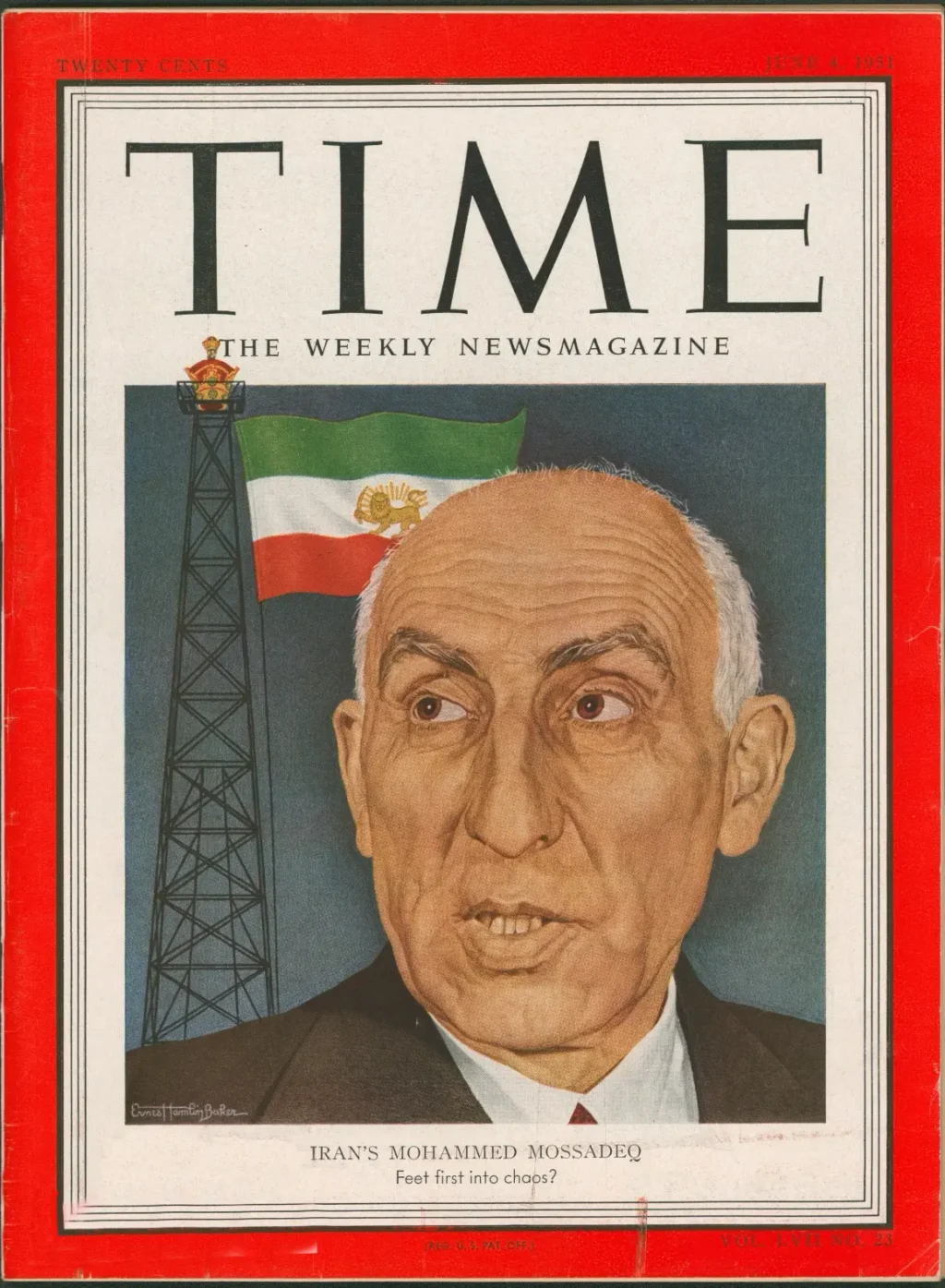
Roughly 118 years ago, on May 26, 1908 British prospector, William Knox D’Arcy, strikes oil on the desert island of Abadan in Persia’s southwestern region of Arabistan (Khuzestan). By 1950, Iran (Persia) was the fourth-largest oil producer in the world.
Special Correspondence to THE NEW YORK TIMES from Tehran dated Aug. 31, 1909, reported on a bloody broad-based revolution drawing on merchants, clerics, intellectuals, and tribal fighters united against both royal despotism and foreign (British and Russian) interference.
Mohammed Aly Shah, the despot, was dethroned. Following the abolishment of the monarchy, the revolutionaries installed a constitutional government.
It is often said, that major wars and revolutions carve in public memory clear defining moments separating ‘before’ from ‘after.’
Ervand Abrahamian writes in his new history of Mossadegh’s fall, the coup of 1953 is such a moment, bringing to a close Iran’s most thrilling experience of national aspiration under perhaps its most humane and sympathetic leader, and replacing him with an autocrat who didn’t stay the course.
In 1933, the British drew up a new 60-year oil agreement which gave Iran a royalty of four shillings to the ton. By 1951 standards, it was exploitation. Under the agreement the British government got more revenue from the Anglo-Iranian Oil Co (renamed British Petroleum, or BP) in taxes alone than the Iranian government received from all its sources of income.
By 1951, Mossadeq put forward oil nationalization after years of Iran attempting to negotiate more fair concession terms with Britain. His idea won over the Majlis (Parliament).
On March 15, 1951 the Majlis held a vote for nationalization of Iranian oil which won unanimously. Hussein Ala stepped down and Mossadegh was elected Prime Minister.
Bulletin On May 1, 1951, a law was signed that revoked the Anglo-Iranian Oil Company’s rights in Iran and replaced it with the National Iranian Oil Company.